


Introduction
Finance applications have transformed how individuals and businesses manage money in the United States. From budgeting and tracking expenses to managing investments and using digital banking, these apps help you manage your money.
You can see and control everything in real time. With rapid fintech growth in the USA, businesses are investing in custom mobile app development. They aim to build secure, scalable finance apps that meet modern user needs.
Finance apps in the USA are growing fast. Businesses are shifting to secure digital payments, lending platforms, and investment tools. Companies building scalable fintech products often work with a trusted USA mobile app developer for long-term success.
What is a Finance App?
A finance app is a software tool that helps users manage money tasks like budgeting, transactions, investments, and payments. Advanced technologies and fintech software development solutions build these applications to ensure security, scalability, and seamless financial operations.
In the USA, finance apps play a critical role in enabling users to access real-time financial insights. They let people track spending, set savings goals, watch investments, and make secure banking transactions from one platform.. With increasing adoption of AI and automation, modern finance apps are becoming smarter and more personalized.
Types of Finance Apps
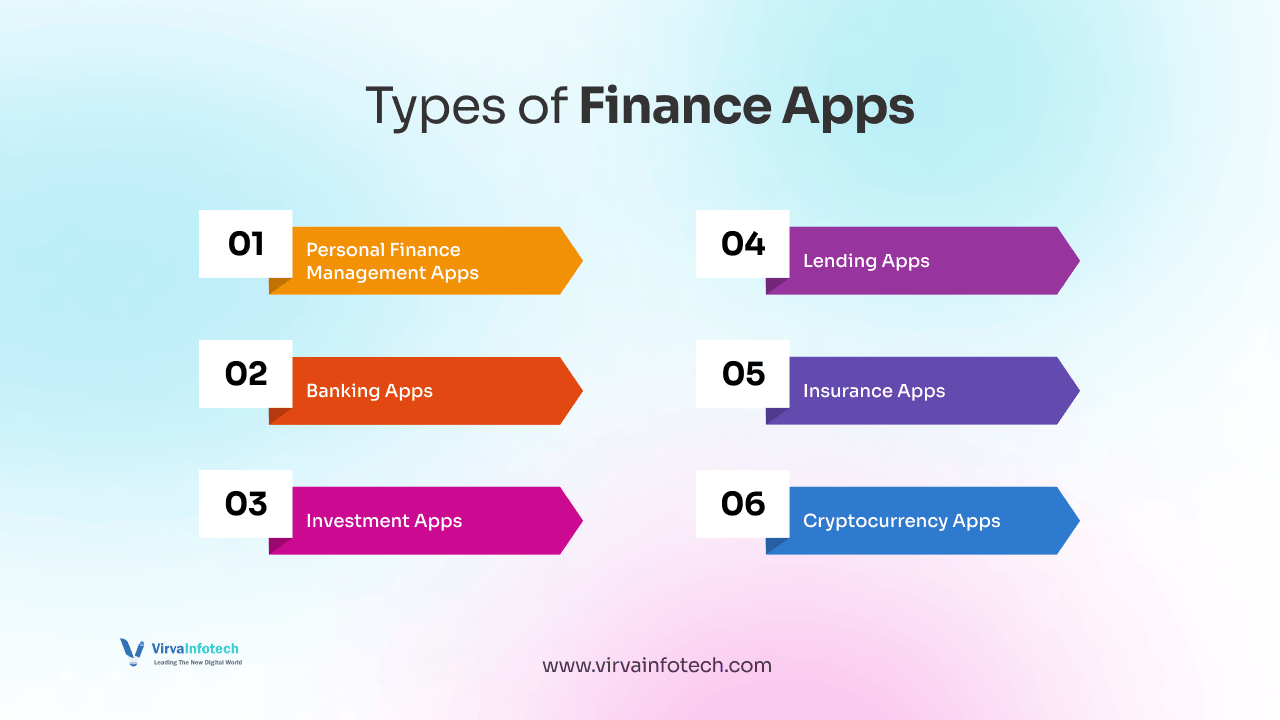
1. Personal Finance Management Apps
These apps help users manage their day-to-day finances by tracking expenses, setting budgets, and improving financial discipline.
Individuals in the USA widely use them to gain better control over their spending habits. These apps provide insights into financial behaviour and help users make informed decisions through reports and analytics.
Key Features:
- Expense tracking and categorization
- Budget planning tools
- Bill reminders and alerts
- Financial reports and insights
2. Banking Apps
Banking apps provide users with remote access to banking services without visiting physical branches.
In the USA, mobile banking adoption is extremely high, with users expecting fast, secure, and user-friendly experiences. These apps support transactions, account management, and even loan applications.
Key Features:
- Instant money transfers
- Bill payments and auto-pay
- Mobile check deposit (OCR)
- Multi-factor login
3. Investment Apps
Investment apps allow users to invest in stocks, ETFs, mutual funds, and cryptocurrencies.
These apps are growing rapidly in the USA because of increasing interest in wealth management AI-powered insights and automated investing tools make them highly attractive.
Key Features:
- Real-time market tracking
- Portfolio management
- Robo-advisory services
- Crypto and forex integration
4. Lending Apps
Lending apps provide quick and paperless loan services to users.
In the USA, many people use fintech lending apps for personal loans, business loans, and peer-to-peer lending. These apps approve loans faster than traditional banks.
Key Features:
- Instant loan approvals
- EMI calculators
- Credit score tracking
- Loan eligibility checks
5. Insurance Apps
Insurance apps simplify the process of buying, managing, and claiming insurance policies.
These apps improve user convenience by offering digital access to policies and real-time claim tracking.
Key Features:
- Policy comparison
- Online purchase and renewal
- Claim tracking
- AI-based customer support
6. Crypto Apps
Crypto apps enable users to trade and manage digital assets securely.
With increasing crypto adoption in the USA, these apps integrate blockchain technology to ensure secure transactions and wallet management.
Key Features:
- Live crypto trading
- Secure wallets
- NFT and DeFi integration
- Staking and passive income
Key Features of a Finance App
A successful finance app must focus on security, usability, and performance. In the USA market, users expect advanced features along with a seamless experience.
Finance apps should include strong login systems such as biometric login and multi-factor login. This ensures user data remains secure from cyber threats.
Additionally, features like real-time notifications, budgeting tools, and seamless payment processing enhance user engagement. AI-powered chatbots and analytics further improve personalization and decision-making.
Core Features:
- User login & security
- Account integration
- Real-time alerts
- Budgeting tools
- Investment tracking
- Secure payments
- AI chatbot support
Building a successful finance platform needs secure APIs, scalable infrastructure, and responsive fintech web solutions. These features support real-time transactions, analytics, and smooth digital banking across devices. Businesses often rely on custom software development services in the USA to build secure and high-performance fintech platforms.
Step-by-Step Finance App Development Process
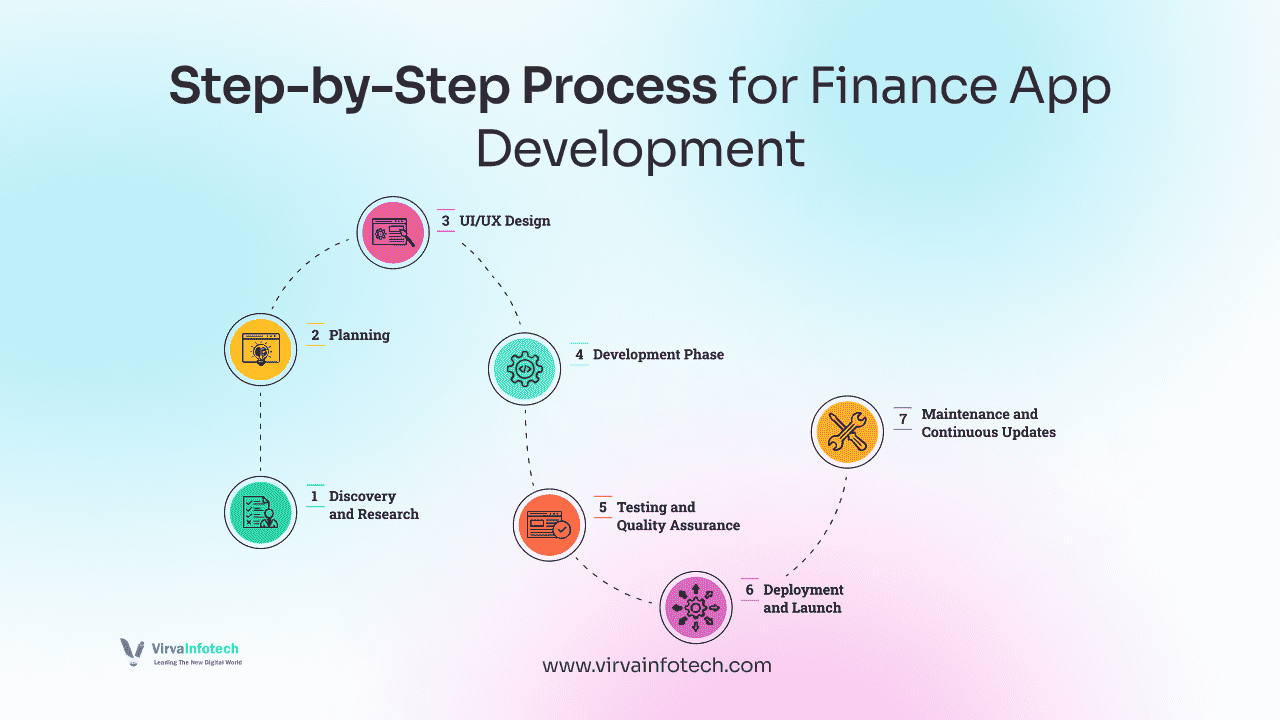
1. Research & Discovery
This phase involves understanding the USA fintech market, user needs, and competitor strategies.
Businesses must analyze market trends, identify target audiences, and define clear business goals. This step builds the app on a strong foundation and aligns it with user expectations.
2. Planning & Strategy
Planning includes selecting features, defining the tech stack, and ensuring regulatory compliance.
In the USA, finance apps must comply with standards like PCI-DSS and data protection laws. Choosing the right technologies ensures scalability and security. Businesses planning secure, scalable fintech products can explore this detailed USA mobile app development guide. It explains app architecture, development workflows, tech stack selection, and deployment strategies for modern apps.
3. UI/UX Design
A finance app must offer a clean, intuitive, and user-friendly interface.
Design plays a crucial role in user retention. A well-designed app improves navigation, reduces friction, and enhances overall user experience.
4. Development
This is where the actual coding begins, including frontend and backend development.
Developers integrate APIs, payment gateways, and security protocols to ensure smooth functionality. Scalable architecture is essential for handling large user bases.
5. Testing & QA
Testing ensures the app is secure, bug-free, and performs well under different conditions.
This includes functional testing, security testing, and performance testing to ensure reliability before launch.
6. Deployment & Launch
After testing, the app is launched on platforms like the App Store and Google Play.
App Store Optimization (ASO) and marketing strategies are essential for visibility in the USA market.
7. Maintenance & Updates
Post-launch support includes bug fixes, feature updates, and performance improvements.
Regular updates keep the app competitive and aligned with user expectations.
Technology Stack for Finance App Development
Choosing the right technology stack is crucial for performance and scalability.
Frontend: React Native, Flutter, Swift, Kotlin
Backend: Node.js, Python, Java
Database: MongoDB, PostgreSQL, Firebase
APIs: Stripe, PayPal, Plaid
Security: SSL, OAuth, biometric login
Cost of Finance App Development in the USA
The overall cost also depends on your development team, app complexity, security requirements, and third-party integrations. Businesses planning fintech solutions can also explore this detailed USA mobile app development cost guide. It explains pricing factors, timelines, maintenance costs, and scalability for modern mobile apps.
Basic App
- Cost: $3,000 – $5,000
- Suitable for startups and simple budgeting apps
Medium Complexity App
- Cost: $8,000 – $10,000
- Includes integrations and analytics
Advanced App
- Cost: $12,000 – $20,000+
- Includes AI, real-time processing, and high security
Conclusion
Finance app development in the USA is a high-growth opportunity driven by increasing demand for digital financial solutions. Businesses that invest in secure, scalable, and easy-to-use finance apps can gain an edge in fintech.
Companies planning long-term fintech growth can explore modern financial software development solutions. These solutions support digital banking, payment systems, lending platforms, and investment apps in the USA.
By focusing on user needs, using advanced technology, and meeting financial rules, you can build a successful finance app. It will deliver real value and support long-term growth.
Planning to build a secure and scalable finance app for the USA market? Our fintech app team helps startups and enterprises build fast banking, payment, investment, and digital finance solutions. We deliver strong security, a smooth user experience, and scalable architecture.