


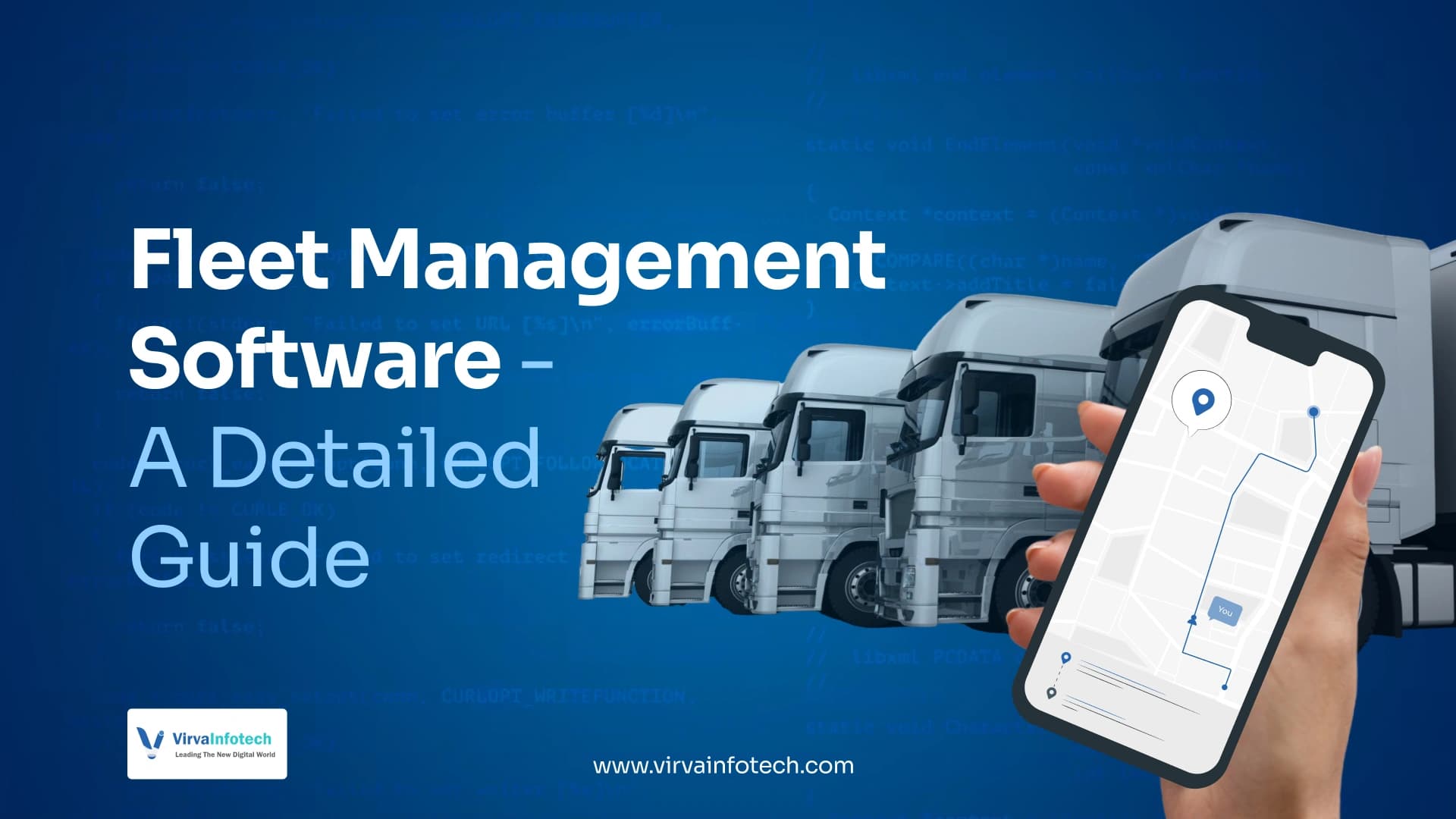
What is Fleet Management Software?
Fleet Management Software (FMS) helps businesses manage, monitor, and optimize vehicle operations in real time. It integrates advanced technologies such as GPS tracking, telematics, and cloud computing to provide actionable insights into fleet performance, driver behavior, and operational efficiency. Businesses across the USA, especially in logistics, transportation, and e-commerce, use these systems to improve operations and reduce costs.
At its core, fleet management software acts as a central dashboard for managing vehicle operations. Companies can use it to track vehicles, schedule maintenance, monitor fuel use, and review performance.
Businesses working with a mobile app development company USA can build scalable fleet platforms with real-time tracking and advanced analytics.
Modern fleet systems can also integrate with vehicle tracking apps and telematics software. Mobile dashboards built with technologies such as React.js, Flutter, and Node.js make fleet data easier to access and manage.
If you're planning to build a custom solution, custom software development services in the USA can help you create features that match your business needs.
Benefits of Fleet Management Software
Improved Operational Efficiency
Fleet management software automates repetitive processes such as route planning, dispatching, and reporting. This reduces manual intervention and minimizes human errors, allowing businesses to operate more efficiently. Real-time dashboards help fleet managers make data-driven decisions instantly, improving workflow and productivity.
Additionally, integration with web application development services in the USA enables businesses to create intuitive dashboards accessible from anywhere. Companies in the USA can use React.js or Vue.js to build scalable systems with faster load times and smooth user experiences.
Real-Time Vehicle Tracking
Real-time GPS tracking allows businesses to monitor vehicle locations, speed, and routes continuously. This visibility helps reduce delays, optimize routes, and improve on-time deliveries for logistics and e-commerce businesses.
Mobile apps built with Flutter or React Native allow fleet managers to access tracking data from anywhere. This improves responsiveness and enhances decision-making in real-time scenarios.
Reduced Fuel and Maintenance Costs
Fleet software helps identify inefficient driving behaviors such as idling, over-speeding, or harsh braking. These insights allow businesses to implement corrective measures, significantly reducing fuel consumption and operational costs.
Moreover, AI-powered logistics automation systems help identify potential vehicle issues before they become costly repairs, reducing downtime and improving fleet efficiency. This not only reduces downtime but also extends vehicle lifespan.
Enhanced Safety
Safety is a top priority for fleet operators. Fleet management software monitors driver behavior and provides alerts for unsafe actions like sudden braking or speeding. This enables managers to provide training and improve overall driver performance.
Advanced systems also use machine learning algorithms and telematics to enhance safety features. Implementing such intelligent systems through custom software development services ensures better risk management and compliance.
Regulatory Compliance
Fleet software helps businesses comply with regulations such as ELD mandates and driver working hours. Automated logs and reports simplify audits and reduce the risk of penalties.
For USA-based businesses, compliance is critical. A well-built SaaS-based compliance system ensures accurate record-keeping and easy reporting.
Looking to develop custom fleet management software for your business?
👉 Explore scalable transportation and fleet management software solutions
Top Fleet Management Software Features
1. Real-Time GPS Tracking
Real-time GPS tracking provides complete visibility into fleet operations. Managers can track vehicle location, speed, and movement instantly, allowing for quick decision-making during delays or emergencies.
APIs power this feature and connect it to applications built with Golang or React. This helps the system deliver better performance and scalability.
2. Fleet Maintenance Alerts
Fleet management systems monitor vehicle health and send automated alerts for maintenance. This proactive approach prevents unexpected breakdowns and reduces repair costs.
Using AI-based predictive analytics, businesses can further enhance maintenance strategies and improve vehicle efficiency.
3. Driver Behavior Monitoring
Driver monitoring systems track behaviors such as speeding and harsh braking. This helps improve safety and reduce accident risks.
Modern dashboards built using UI/UX design services ensure that insights are easy to understand and actionable.
4. Fuel Usage Reporting
Fuel tracking tools analyze consumption patterns and identify problems. This helps businesses reduce fuel costs significantly.
5. Trip History & Route Optimization
Fleet software records trip data, helping businesses analyze routes and optimize future journeys for efficiency.
6. Geofencing and Alerts
Geofencing allows managers to set virtual boundaries and receive alerts when vehicles enter or exit specific zones.
7. Mobile Access via Vehicle Tracking App
Mobile apps built using Flutter or React Native provide real-time access to fleet data, improving flexibility and responsiveness.
8. Integration with Telematics Software
Telematics integration provides deep insights into vehicle performance, enabling predictive maintenance and better decision-making.
9. Analytics & Reporting Dashboard
Advanced dashboards provide detailed analytics on fleet performance, helping businesses make strategic decisions.
Devices Used in Fleet Management Systems
1. GPS Trackers
GPS trackers provide real-time location data, improving route planning and vehicle security.
2. OBD-II Devices
These devices monitor engine health and diagnostics, helping prevent breakdowns.
3. Dashcams
Dashcams enhance safety and provide evidence in case of accidents.
4. RFID Tags
RFID technology helps track assets and manage inventory efficiently.
5. Telematics Devices
Telematics devices combine GPS and diagnostics to provide complete fleet insights.
Types of Fleet Management Software
Cloud-Based Fleet Software
Cloud solutions offer scalability and remote access, making them ideal for growing businesses.
On-Premise Fleet Software
On-premise systems provide greater control over data but require higher investment.
Hybrid Systems
Hybrid solutions combine cloud flexibility with on-premise security.
Industry-Specific Solutions
Custom solutions cater to specific industries like logistics, construction, or transportation.
Fleet Management Software Development Steps
1. Define Your Goals
Clearly outline your requirements and features before starting development.
2. Choose the Right Tech Stack
Use technologies like React.js, Node.js, Flutter, and Golang for scalable solutions.
Businesses planning large-scale transportation platforms can also explore this detailed logistics app development guide to understand architecture planning, feature integration, and scalable deployment strategies.
3. Integrate Telematics and GPS APIs
Integrate APIs to enable real-time tracking and analytics.
4. Build Core Modules
Develop essential modules like tracking, reporting, and alerts.
5. Test & Deploy
Conduct thorough testing before launching the software.
6. Post-Launch Support
Provide ongoing updates and support for long-term success.
Fleet Management Software Development Cost
The cost of developing fleet management software depends on deployment type, real-time tracking requirements, telematics integrations, analytics capabilities, and overall system scalability.
Estimated Development Cost by Software Type
| Fleet Software Type | Key Functionalities | Estimated USA Development |
| Basic Fleet Tracking System | GPS tracking, trip history, maintenance alerts | $25,000 – $50,000 |
| Advanced Fleet Management Platform | Driver monitoring, route optimization, analytics dashboards | $50,000 – $120,000 |
| Enterprise Fleet Ecosystem | AI-powered analytics, telematics integration, automation systems | $120,000 – $300,000+ |
Conclusion
Fleet management software has become a critical asset for modern businesses in the USA. From improving operational efficiency to enhancing safety and reducing costs, it offers a complete solution for managing vehicle fleets effectively.
Whether you want to build a custom system or upgrade an existing one, mobile app development, AI solutions, and SaaS platforms can help your business stay competitive. Investing in advanced fleet technology can support long-term growth, improve performance, and increase customer satisfaction. Businesses can also explore transportation app development services in the USA to build solutions tailored to their operations.
Ready to develop scalable fleet management software in the USA?