

Introduction
If you're building a startup in the United States and thinking about adding banking features to your product, you've probably run into the term BaaS, short for Banking as a Service. It sounds technical, but the idea behind it is simple. BaaS lets your company offer banking products like accounts, cards, and payments without becoming a bank yourself.
For years, only licensed banks could offer things like checking accounts or debit cards. Today, thanks to BaaS platforms, a startup can plug into a licensed bank's infrastructure through APIs and launch its own branded financial product in weeks instead of years. This is exactly why so many U.S. founders are exploring fintech software development as a core part of their growth strategy.
In this guide, we'll break down what BaaS actually means, how it works, why it matters for startups, and how to decide if it's the right move for your business.
What is Banking as a Service (BaaS)?
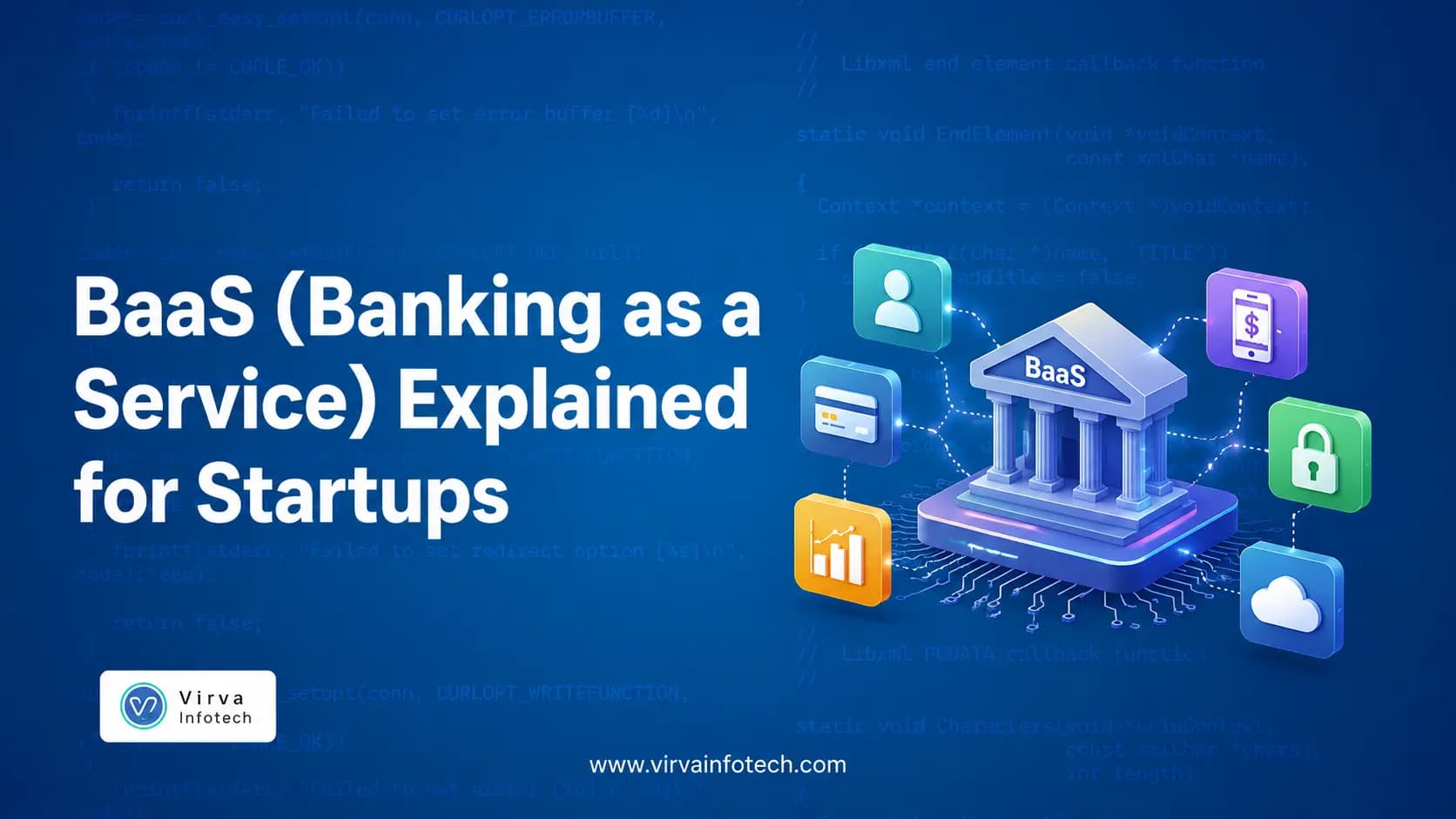
Banking as a Service is a model where licensed banks open up their core systems, such as account creation, card issuing, payments, and compliance tools, to non-bank companies through APIs. A startup uses these APIs to build banking features directly into its own app or platform, all while the licensed bank handles the regulatory and custodial side behind the scenes.
Think of it like renting a bank's engine and putting your own dashboard on top of it. You get the speed and control of a tech company, and the bank provides the license, security, and compliance backbone.
This model has fueled the rise of neobanks, embedded finance apps, and countless startups across the USA that now offer banking features without ever applying for a banking charter.
How Does BaaS Actually Work?
The BaaS model usually involves three layers working together:
1. The Licensed Bank: This is a chartered bank that holds the actual banking license and is responsible for regulatory compliance, deposit insurance, and holding customer funds.
2. The BaaS Provider: This is the technology layer that connects the bank's systems to the startup through APIs. Providers like Unit, Synctera, Treasury Prime, and similar platforms package banking functions into developer-friendly tools.
3. The Startup (You): Your company builds the customer-facing product, whether that's a mobile app, a SaaS platform, or a marketplace, and integrates banking features using the BaaS provider's APIs.
When a user signs up in your app to open an account or request a card, the request flows through your platform, into the BaaS provider's API, and finally to the partner bank, which approves and manages the underlying account. The user experience feels seamless, even though three separate parties are involved.
Why BaaS Matters for Startups
Startups don't have the time, capital, or regulatory expertise to become a bank. BaaS removes that barrier and lets founders focus on building a great product instead of navigating banking law.
Faster Time to Market
Instead of spending years applying for a banking license, a startup can launch a banking product in a matter of months by partnering with a BaaS provider.
Lower Upfront Cost
Building banking infrastructure from scratch is expensive. BaaS lets startups pay for what they use, which keeps early-stage costs manageable.
Built-In Compliance Support
Regulatory requirements like KYC (Know Your Customer) and AML (Anti-Money Laundering) checks are often built into the BaaS provider's tools, reducing the compliance burden on a small team.
Focus on the Core Product
Startups can spend their engineering resources on the features that make their app unique, rather than reinventing banking infrastructure that already exists.
Access to Banking-Grade Security
Since transactions flow through licensed banks, startups benefit from the same fraud protection, encryption, and security standards used by traditional financial institutions.
Common Use Cases for BaaS in the USA
BaaS isn't just for neobanks. A wide range of U.S. businesses are embedding banking features into their platforms, including:
- Payroll and HR platforms offering employees early wage access or built-in bank accounts
- E-commerce marketplaces issuing branded debit or credit cards to sellers
- Gig economy apps giving freelancers instant payouts and digital wallets
- B2B SaaS platforms adding expense management and virtual card issuing
- Vertical fintech startups building niche banking products for specific industries like healthcare, real estate, or logistics
This growing trend is often called embedded finance, and it's one of the biggest reasons founders are investing in modern finance app development to stay competitive in the U.S. market.
Embedded finance is expected to keep growing across the U.S. because customers now expect financial tools to live inside the apps they already use every day, instead of forcing them to open a separate banking app. A startup that adds banking features directly into its existing platform can increase user retention, unlock new revenue streams, and build a stickier product overall.
Key Features Startups Can Offer Through BaaS
When a startup partners with a BaaS provider, it typically gains access to features such as:
- Business and consumer bank account creation
- Debit and credit card issuing, both physical and virtual
- Domestic and international payment processing
- Real-time transaction monitoring
- ACH transfers and wire payments
- Fraud detection and risk management tools
- KYC and identity verification workflows
- FDIC-insured deposit accounts through the partner bank
These capabilities allow a startup to launch a fully functioning financial product without owning any banking infrastructure directly.
BaaS vs Traditional Banking Integration
Startups sometimes confuse BaaS with simply integrating a payment gateway like Stripe or PayPal. The difference matters.
A payment gateway lets you move money in and out of an existing bank account. BaaS goes further. It lets you create and manage bank accounts, issue cards, and offer full banking experiences under your own brand. If a payment gateway is like renting a cash register, BaaS is like renting the entire back office of a bank.
For startups aiming to build a true fintech product rather than just processing payments, BaaS is usually the more strategic path.
BaaS Regulatory Landscape in the USA
Even though your startup won't hold a banking charter, U.S. regulators still expect you to operate responsibly. The Federal Deposit Insurance Corporation (FDIC), the Consumer Financial Protection Bureau (CFPB), and state banking regulators have all increased their focus on BaaS partnerships in recent years. This means your sponsor bank will require your startup to follow strict rules around:
- Transparent marketing that doesn't misrepresent who actually holds the banking license
- Clear disclosures about FDIC insurance coverage on deposit accounts
- Ongoing KYC and AML monitoring, not just at account opening
- Data security standards that protect customer financial information
- Regular audits and reporting to the sponsor bank's compliance team
A well-structured BaaS partnership shares this responsibility across all three parties, but your startup still needs internal processes to stay aligned with your bank partner's requirements. Building this into your product from day one, rather than retrofitting it later, saves significant time and legal cost.
What Does BaaS Cost for a Startup?
Pricing varies widely depending on the provider and the features you need, but most BaaS platforms charge through a combination of:
- Setup or integration fees for connecting to their APIs and onboarding with a sponsor bank
- Per-account or per-user fees based on how many accounts you activate
- Transaction-based fees charged per payment, transfer, or card swipe
- Monthly platform fees for ongoing access to the infrastructure and support
Early-stage startups should model these costs against expected transaction volume before signing a contract. A pricing structure that looks affordable at 500 users can become expensive at 50,000 users, so it's worth negotiating volume-based pricing as part of your BaaS agreement.
Challenges to Consider Before Choosing BaaS
BaaS isn't a shortcut without responsibility. Startups should keep a few things in mind before committing:
- Compliance still matters. Even though the bank handles licensing, your startup is still responsible for how you present the product to users and how you handle customer data.
- Provider reliability. Your entire banking experience depends on your BaaS provider's uptime and support, so choosing a stable, well-reviewed partner is critical.
- Cost at scale. BaaS pricing models can become expensive as transaction volume grows, so it's worth planning your unit economics early.
- Bank partnership risk. If your sponsor bank changes its risk appetite or partnership terms, your product could be affected, so having a contingency plan matters.
Working with an experienced development partner helps startups navigate these decisions and choose the right BaaS provider and technology stack from day one.
How to Get Started with BaaS as a Startup
- Define your use case. Decide whether you need accounts, cards, payments, or a combination of all three.
- Research BaaS providers. Compare pricing, supported features, integration complexity, and the strength of their partner banks.
- Plan your compliance approach. Even with a BaaS provider, you need clear policies for KYC, data privacy, and customer support.
- Build a secure, scalable product. Partner with a development team experienced in fintech to integrate the APIs correctly and design a smooth user experience.
- Test thoroughly before launch. Financial products require rigorous testing for security, performance, and compliance before going live.
Startups that follow a structured approach to development, similar to the process outlined in our finance app development guide, tend to launch faster and avoid costly rework later.
Final Thoughts
Banking-as-a-Service has changed what's possible for startups in the United States. It gives founders a realistic path to launching real banking products, embedded payments, and card issuing programs without the cost and complexity of becoming a licensed bank. The opportunity is real, but success still depends on choosing the right BaaS provider and building your product with security, compliance, and user experience in mind.
If you're a startup founder exploring how to bring banking features into your platform, working with a team that understands fintech development end-to-end can save you time, reduce risk, and help you launch with confidence. Our team at Virva Infotech helps U.S. startups design and build secure, scalable fintech solutions tailored to their business goals.