


Introduction
The ceramic tiles industry in the USA is rapidly adopting digital solutions to improve customer experience, streamline operations, and increase sales. From manufacturers and distributors to retailers and end customers, mobile apps are becoming essential tools to manage product catalogs, visualize designs, and handle orders efficiently.
Ceramic tile businesses in the USA are rapidly adopting digital solutions for inventory management, dealer networks, product catalogs, and order tracking. Companies planning scalable platforms often partner with a trusted custom mobile app development company USA to build efficient and user-friendly business applications.
Businesses looking to build scalable platforms are increasingly investing in custom mobile app development services to create feature-rich applications tailored to their specific industry needs.
Types of Apps for the Ceramic Tiles Industry
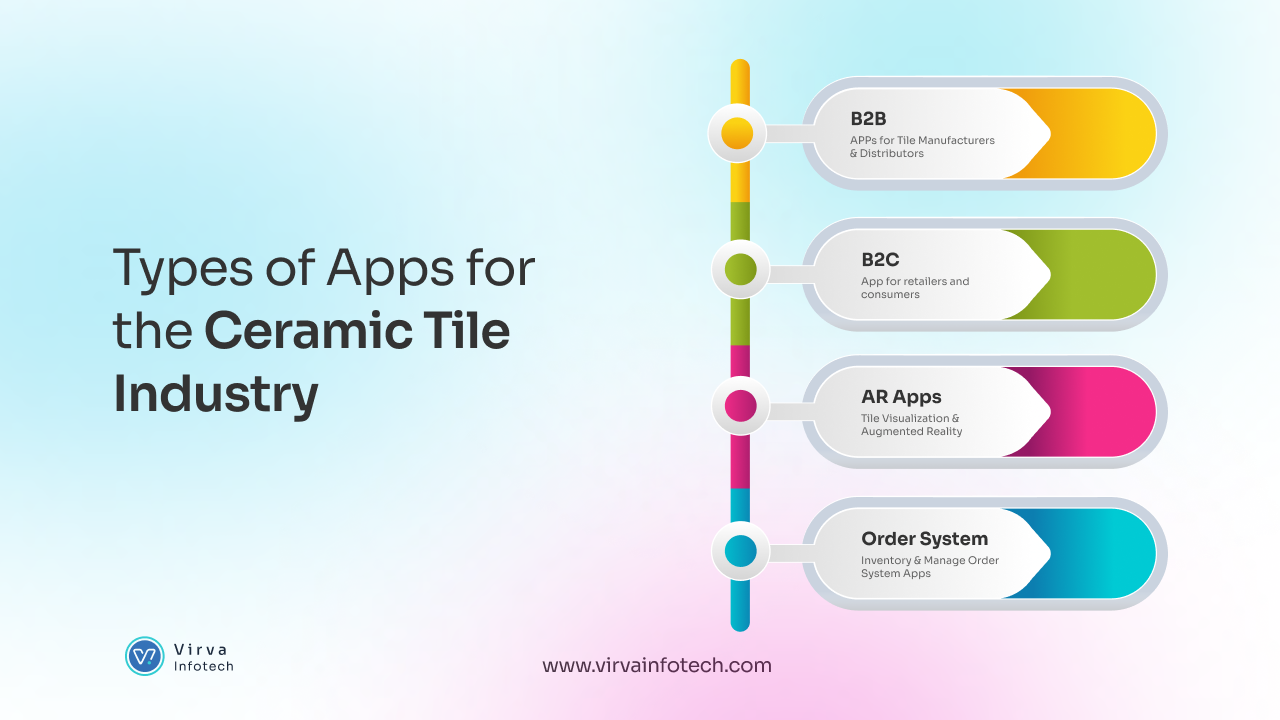
1. B2B Apps for Manufacturers & Distributors
B2B applications are designed to help manufacturers, wholesalers, and distributors manage supply chains, inventory, and bulk orders efficiently. In the USA market, these apps play a critical role in reducing manual work and improving operational efficiency.
These apps act as a centralized platform where businesses can track inventory, communicate with suppliers, and manage logistics seamlessly. By digitizing operations, companies can reduce delays, improve coordination, and ensure smooth order fulfilment.
Key Features:
- Inventory tracking and management
- Bulk order processing and tracking
- Supplier and logistics communication
- Automated invoicing and billing
- Sales analytics and reporting
Benefits:
- Reduces operational inefficiencies
- Improves supply chain visibility
- Automates business processes
2. B2C Apps for Retailers & Customers
B2C apps allow tile retailers to sell directly to customers through digital storefronts. These apps provide a seamless shopping experience, enabling users to browse tile collections, compare designs, and place orders without visiting physical stores.
In the USA, customers prefer convenience and digital-first experiences. A well-designed tile app can significantly increase engagement, improve conversions, and expand market reach.
Key Features:
- High-quality product catalogs
- Real-time stock availability
- Secure online payments
- Customer reviews and ratings
- AI-based recommendations
Benefits:
- Enhances customer experience
- Increases online sales
- Expands business reach
3. AR-Based Tile Visualization Apps
Augmented reality apps solve one of the biggest challenges in tile purchasing—visualization. These apps allow users to see how tiles will look in their homes or offices using their smartphone cameras.
This technology is gaining popularity in the USA as it helps customers make confident decisions and reduces product returns.
Key Features:
- Real-time room scanning
- 3D tile visualization
- Customization of colors and textures
- Cost estimation tools
- Social sharing options
Benefits:
- Improves buying confidence
- Reduces showroom dependency
- Boosts conversions
4. Inventory & Order Management Apps
These apps are designed for warehouse managers, retailers, and distributors to manage stock and orders efficiently.
With real-time tracking and automation, businesses can avoid stock shortages, reduce waste, and streamline logistics operations.
Key Features:
- Live inventory tracking
- Automated stock alerts
- Barcode/QR scanning
- Order and delivery tracking
- Sales analytics
Benefits:
- Prevents stock issues
- Improves operational efficiency
- Reduces manual errors
Key Features of a Ceramic Tile App
A successful ceramic tile app must deliver both functionality and user experience. In the USA market, users expect fast, intuitive, and visually rich applications.
The app should include a high-quality product catalogue with detailed specifications, allowing users to explore tiles easily. Features like AR visualisation, order management, and pricing tools further enhance usability and engagement.
Additionally, integrating customer support systems such as live chat and AI chatbots ensures better communication and improves user satisfaction.
Core Features:
- Product catalog with HD images
- AR visualization tools
- Order and inventory management
- Pricing and quotation system
- Tile calculator and customization
- Customer support (chat + AI chatbot)
- Store locator and dealer management
Modern ceramic tile businesses also require seamless product catalogs, dealer portals, secure online ordering, and smooth customer management systems. Many brands rely on professional e-commerce website development services USA to build scalable B2B and B2C digital platforms.
Technology Stack for Tile App Development
Choosing the right technology stack ensures performance, scalability, and a seamless user experience.
For businesses planning scalable solutions, leveraging enterprise-grade software development solutions ensures long-term reliability and performance.
Frontend: React Native, Flutter
Backend: Node.js, Python (Django)
Database: PostgreSQL, Firebase
Cloud: AWS, Google Cloud
AR Tools: Unity, Vuforia
AI Integration: Open AI, IBM Watson
These technologies help build high-performance applications capable of handling large product catalogues, real-time updates, and interactive features.
Development Process for a Ceramic Tile App
1. Market Research & Planning
Understanding the USA market, customer behavior, and competitor strategies is the first step. Businesses must define their target audience and prioritize features based on user needs.
2. UI/UX Design
A clean and intuitive design is essential for user engagement. The app should offer easy navigation, fast loading, and visually appealing layouts.
3. Development
This phase includes frontend and backend development along with API integrations. Features like AR visualization, payment gateways, and inventory systems are implemented here.
To build scalable dealer management systems, inventory automation, and enterprise-grade backend operations, many ceramic tile businesses in the USA invest in custom software development services USA for long-term flexibility and operational efficiency.
4. Testing
Testing ensures the app is secure, bug-free, and performs well across devices. It includes functionality, performance, and security testing.
5. Deployment
The app is launched on the App Store and Google Play with proper optimization to improve visibility in the USA market.
6. Maintenance
Regular updates, bug fixes, and feature enhancements keep the app competitive and aligned with user expectations.
Monetization Strategies
Businesses can generate revenue through multiple models depending on their target audience.
Popular Monetization Models:
- Subscription plans (premium features)
- In-app advertising
- Commission-based sales
- Freemium model
These strategies help businesses create sustainable revenue streams while delivering value to users.
Cost of Developing a Ceramic Tile App in the USA
The cost depends on features, complexity, and development requirements.
Basic App
- Cost: $10,000 – $20,000
- Ideal for simple catalogues
AR-Based App
- Cost: $30,000 – $50,000
- Includes visualization features
Advanced App
- Cost: $50,000 – $100,000+
- Includes AI, AR, and full eCommerce
The cost also depends on whether you hire app developers in the USA with experience in building scalable and industry-specific applications.
Future Trends in Tile Industry Apps
The ceramic tile industry is evolving with emerging technologies.
AI-powered recommendations are improving personalization, while AR is enhancing visualization experiences. Blockchain is being explored for supply chain transparency, and eCommerce platforms are expanding their digital reach.
These innovations are shaping the future of tile businesses in the USA, making apps more intelligent, efficient, and user-centric.
Before launching an industry-specific business app, understanding the complete mobile product development process helps improve planning, budget estimation, and long-term scalability. You can also explore our detailed mobile app development guide for better execution.
Conclusion
Developing an app for the ceramic tiles industry can significantly improve customer engagement, streamline operations, and boost sales. By integrating advanced technologies like AR, AI, and real-time inventory tracking, businesses can create powerful digital solutions that stand out in the competitive US market.
Planning to build a smart ceramic tile app for your USA business? Our mobile app development team helps manufacturers, distributors, and retailers create scalable tile industry solutions with AR visualization, inventory management, dealer portals, and seamless online ordering experiences.