


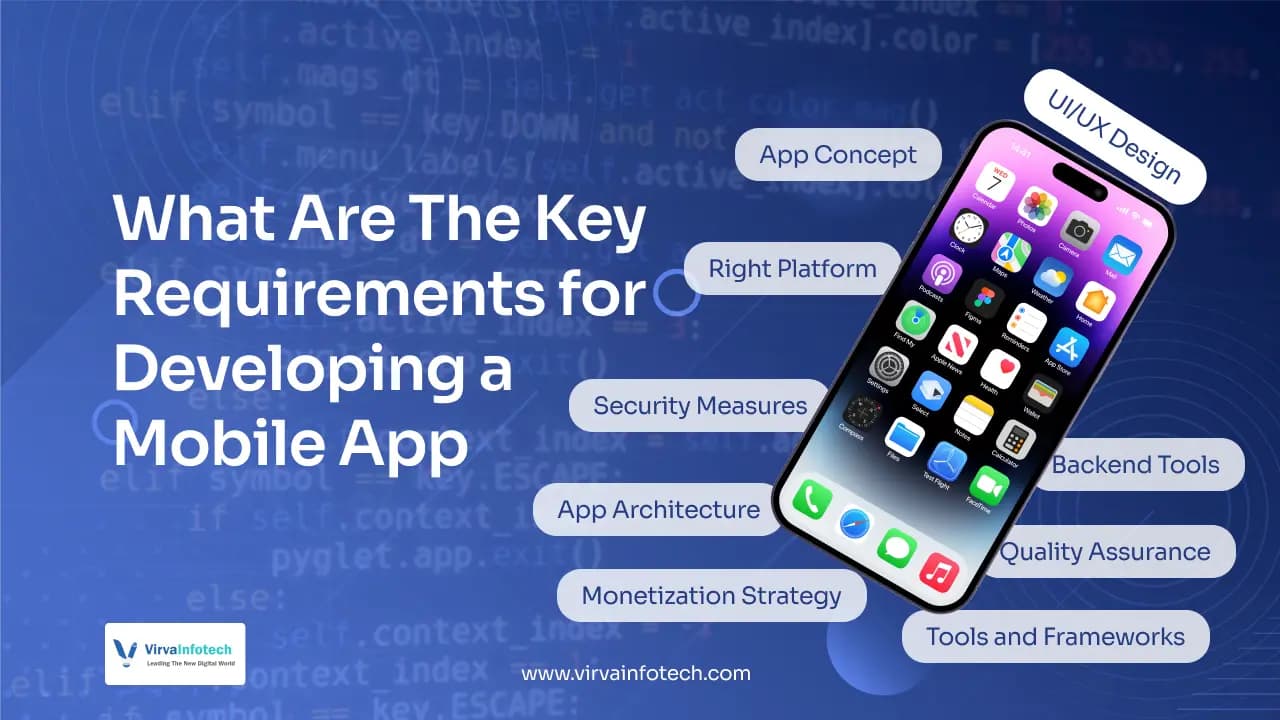
Introduction
Mobile applications have become the backbone of modern digital ecosystems, enabling businesses, startups, and individuals to deliver seamless services and user experiences. With millions of apps on Google Play and the Apple App Store, success takes more than coding. It needs smart planning, technical skill, and a user-first mindset.
This guide covers key needs for building a mobile app. It includes main stages, best practices, and tips to boost performance. It also highlights help from a custom mobile app development company in the USA. Whether you're a startup founder or run a large business, knowing these needs will help you.
You can build scalable, secure, high-performing apps that match today’s industry trends.
1. Define Your App’s Concept, Purpose, and Target Audience
Before diving into development, defining your app’s concept and purpose is crucial. A successful app starts with a clear idea—what problem it solves, what value it provides, and how it stands out from competitors. Conduct detailed market research to study current apps, find gaps, and see how your app can offer a unique solution. This phase helps shape your product vision and lays the foundation for development.
Understanding your target audience is equally important. Analyze user behavior, demographics, preferences, and pain points to design features that truly resonate with users.
Businesses in the USA can use this step. They may offer mobile app consulting.
They may build apps for startups. They may provide custom app development. It helps align product strategy with market demand and improve user adoption rates.
For businesses planning a scalable product roadmap, this mobile app development guide for USA businesses offers clear insights. It covers modern app strategies, technology choices, and market-focused execution.
2. Choose the Right Platform: iOS, Android, or Cross-Platform
Selecting the right platform is a strategic decision that directly impacts your app’s reach, cost, and performance. High-value users in markets like the USA often prefer iOS apps. Android leads globally with a larger user base. Choosing between these platforms depends on your target audience, business model, and budget.
Cross-platform development has become increasingly popular due to its cost-effectiveness and faster time-to-market. Frameworks like Flutter and React Native let developers build apps for both platforms with one codebase. This makes Flutter app development in the USA faster and more scalable.
Businesses exploring cross-platform frameworks can also review these real-life Flutter app case studies. This helps them understand how developers build scalable apps for production.
3. Focus on UI/UX Design: Create an Engaging User Experience
User interface (UI) and user experience (UX) design play a vital role in determining your app’s success. A visually appealing and intuitive interface ensures that users can navigate easily and complete tasks efficiently. Poor design can lead to high bounce rates and app removals, making UI/UX a critical investment.
To enhance user engagement, focus on responsive layouts, consistent navigation, and clear visual hierarchy. adding UI/UX design services, mobile app interface optimization, and user journey mapping can significantly improve usability. Regular user tests and feedback loops help improve design and ensure a smooth app experience on all devices.
4. Select the Right App Architecture: Build a Scalable Solution
App architecture defines how your application is structured and how its components interact. Choosing the right architecture ensures ability to grow, ease of maintenance, and performance optimization. Popular architecture patterns like MVC, MVP, and MVVM help organize code efficiently and streamline development workflows.
A well-planned architecture reduces technical debt and allows your app to scale as your business grows. Companies that offer custom software development, enterprise app architecture, and scalable app development can help you.
They can design robust systems that support future updates, integrations, and performance improvements.
5. Backend Development: Power Your App’s Core Features
The backend is the backbone of your mobile app, handling data storage, user secure login, server logic, and integrations. A strong backend ensures that your app runs smoothly and can handle increasing user loads without performance issues.
Modern backend solutions include cloud platforms like AWS and Firebase, along with frameworks such as Node.js, Django, and Laravel. Businesses in the USA can use cloud app development services and API solutions.
They can also use cloud-based app infrastructure.
This helps them build secure, scalable apps with real-time updates and smooth performance.
Businesses planning scalable backend systems can also read this guide on U.S. mobile app development costs.
It explains how APIs, cloud hosting, and real-time features affect total development budgets.
6. Use Development Tools and Frameworks: Streamline Coding
Choosing the right development tools and frameworks significantly impacts productivity and code quality. Tools like Android Studio and Xcode are key for native development. Frameworks like Flutter and React Native speed up cross-platform app development.
Using modern tools enables faster debugging, efficient code management, and smoother deployment processes. Companies that offer software development, mobile app development, and agile solutions can streamline development. They also ensure high-quality results and faster time-to-market.
7. Thorough Testing and Quality Assurance: Deliver a Flawless Experience
Testing is a critical phase that ensures your app performs flawlessly under various conditions. Understanding the complete Android application lifecycle can also help businesses improve testing, deployment, and long-term app maintenance strategies. It involves multiple testing types, including functional testing, performance testing, usability testing, and security testing. Skipping this step can result in poor user experience and negative reviews.
Automation tools like Selenium, Appium, and JUnit help streamline testing processes and improve accuracy. Businesses that offer QA testing, mobile app testing, and performance optimization can help your app meet industry standards. They can also deliver a bug-free experience.
8. Implement Security Measures: Protect User Data
Security is a non-negotiable aspect of mobile app development, especially in an era where data breaches are common. Protecting user data builds trust and ensures compliance with regulations like GDPR and other privacy laws.
Implement strong encryption, secure login mechanisms, and follow OWASP guidelines for secure coding. Integrating security solutions, secure app development services, and data protection strategies ensures your app remains safe from security weaknesses and cyber threats.
9. Develop a Monetization Strategy: Maximize App Revenue
If you designed your app for business purposes, you need a revenue generation strategy. Different revenue models include in-app purchases, subscription plans, and ad integrations. Choosing the right strategy depends on your target audience and app functionality.
You can also explore advanced strategies like freemium models, enterprise SaaS solutions, and mobile commerce integration. Businesses offering SaaS development services, eCommerce app development, and digital product revenue generation strategies can help maximize your app’s revenue potential.
10. Optimize for App Stores: Enhance Discoverability with ASO
App Store Optimization (ASO) is crucial for improving your app’s visibility and increasing downloads. Optimizing your app title, description, keywords, and visuals helps it rank higher in app store search results.
Using targeted keywords like mobile app development USA, app development company USA, and custom mobile apps for startups can boost visibility. Additionally, focusing on user reviews, ratings, and regular updates ensures long-term growth and engagement.
Conclusion
Developing a successful mobile app requires a combination of strategy, technology, and continuous improvement. From defining your app idea to launching and improving it in app stores, each step is crucial. It helps determine your app’s success. A user-focused approach, strong architecture, and robust security measures are essential for building a reliable and scalable application.
The journey doesn’t end after launch. Continuous monitoring, updates, and adapting to user feedback are key to staying competitive in the evolving mobile app landscape. By following these key requirements, businesses can build strong apps that deliver long-term value. These apps can also support steady growth in the digital marketplace.
Ready to turn your app idea into a scalable digital product? Our team helps startups and enterprises build secure, high-performance mobile applications with modern technologies, intuitive UI/UX, and future-ready app development strategies.