


Introduction
The logistics industry in the United States is undergoing a massive transformation driven by advanced technologies, automation, and rising customer expectations for faster and more efficient deliveries. Businesses are no longer relying on traditional supply chain models—instead, they are investing in intelligent digital solutions to stay competitive in a rapidly evolving market.
From AI-powered route optimization to real-time tracking and cloud-based logistics platforms, companies are leveraging modern tools to enhance operational efficiency and reduce costs. Businesses investing in enterprise mobile app development are building scalable, high-performance logistics platforms tailored to modern supply chain operations in the USA.
In this guide, we explore the top logistics app development trends shaping the U.S. market in 2026 and how businesses can leverage them for growth.
Top Logistic Trends in 2026
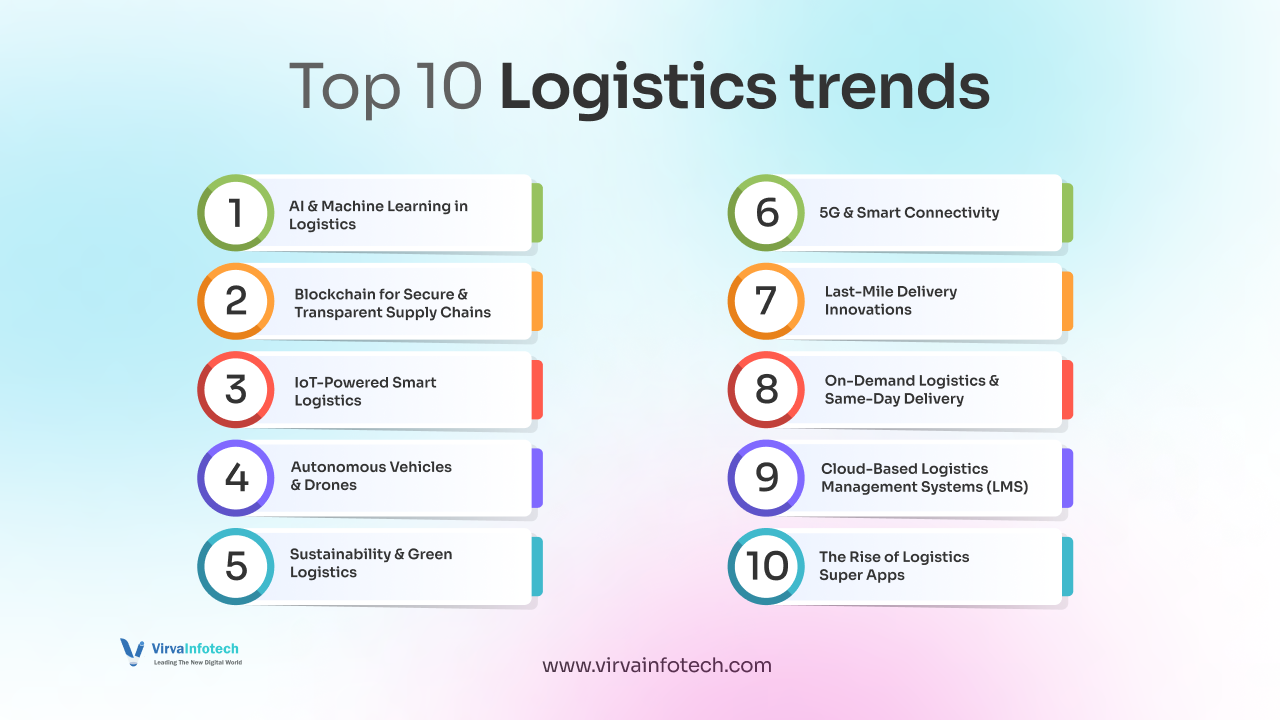
1. AI and Machine Learning in Logistics
Artificial Intelligence and Machine Learning are revolutionizing logistics operations by enabling smarter decision-making, predictive analytics, and automation. In the U.S., companies are increasingly using AI to optimize delivery routes, forecast demand, and reduce operational inefficiencies.
AI systems analyze historical data, traffic patterns, and customer behavior to improve logistics planning. This results in faster deliveries, reduced fuel consumption, and better customer satisfaction.
For a deeper understanding of building such platforms, read our logistics app development guide.
Key Benefits:
- Predictive demand forecasting
- Smart route optimization
- Warehouse automation
2. Blockchain for Secure Supply Chains
Blockchain technology is enhancing transparency and security in logistics by creating tamper-proof records of transactions. In the U.S., supply chain companies are adopting blockchain to reduce fraud and improve trust between stakeholders.
It allows real-time tracking of shipments and automates agreements through smart contracts, eliminating intermediaries and delays.
Key Benefits:
- End-to-end visibility
- Secure and transparent transactions
- Reduced paperwork
3. IoT-Powered Smart Logistics
The Internet of Things (IoT) is enabling real-time tracking and monitoring of goods across the supply chain. U.S.-based logistics companies are using IoT devices such as GPS trackers and smart sensors to ensure efficiency and safety.
IoT helps monitor temperature-sensitive shipments, track fleet performance, and provide real-time updates to customers. Many logistics companies in the USA are also adopting advanced fleet management software solutions to improve route planning, vehicle tracking, and operational efficiency.
As transportation and supply chain operations continue to evolve digitally, many businesses are investing in transportation app development services to build scalable logistics platforms with real-time tracking, fleet management, and seamless delivery experiences across the USA.
Key Benefits:
- Real-time shipment tracking
- Smart sensors for monitoring
- Fleet performance optimization
4. Autonomous Vehicles and Drones
Automation is reshaping last-mile delivery with the introduction of self-driving vehicles and drones. Companies in the U.S. are testing autonomous delivery systems to reduce costs and improve delivery speed.
This trend is particularly useful in urban areas where faster delivery is critical.
Key Benefits:
- Reduced labor costs
- Faster deliveries
- Improved efficiency
5. Sustainable and Green Logistics
Sustainability is becoming a top priority in the logistics sector. U.S. companies are adopting eco-friendly practices such as electric vehicles and green packaging to reduce carbon emissions.
This not only helps the environment but also improves brand reputation among environmentally conscious consumers.
Key Benefits:
- Reduced carbon footprint
- Cost savings on fuel
- Eco-friendly operations
6. 5G and Smart Connectivity
The rollout of 5G in the U.S. is significantly improving logistics operations by enabling faster data transfer and real-time communication.
With 5G, logistics apps can provide instant updates, improve tracking accuracy, and enhance overall system performance.
Key Benefits:
- Real-time tracking
- Faster data processing
- Improved connectivity
Want to modernize your logistics operations with a scalable mobile app?
👉 Explore our logistics app development solutions designed for the U.S. market
7. Last-Mile Delivery Innovations
Last-mile delivery remains one of the most complex aspects of logistics. Companies are using AI, automation, and micro-fulfillment centers to improve efficiency.
Businesses investing in a top-rated mobile app development services USA provider can build scalable delivery apps that optimize last-mile operations and improve customer experience.
Key Benefits:
- Faster delivery times
- Reduced operational costs
- Improved customer satisfaction
8. On-Demand Logistics and Same-Day Delivery
On-demand logistics services are growing rapidly in the U.S., driven by eCommerce demand. Customers now expect same-day or even same-hour delivery.
This has pushed companies to adopt flexible logistics models supported by AI and automation.
Key Benefits:
- Faster delivery options
- Better customer experience
- Increased efficiency
9. Cloud-Based Logistics Management Systems
Cloud technology allows logistics companies to manage operations efficiently from a centralized platform. It improves scalability, data security, and real-time access to information.
In addition to backend scalability, logistics businesses also require centralized dashboards, workflow automation, and data-driven decision-making systems to manage operations efficiently. Many enterprises rely on a trusted digital transformation agency USA to streamline logistics processes and improve overall operational performance.
Key Benefits:
- Centralized data management
- High scalability
- Improved security
10. Rise of Logistics Super Apps
Super apps are becoming popular in the U.S. logistics sector by combining multiple services into a single platform. These apps integrate tracking, payments, and delivery management in one place.
Businesses focusing on advanced platforms often invest in saas development services to build scalable, subscription-based logistics solutions.
Key Benefits:
- Unified platform
- Better user experience
- Multi-service integration
Estimated Cost for Logistics App Development in the USA
As logistics technologies continue evolving in 2026, the development budget for logistics platforms varies based on automation level, scalability, and integrations.
| Logistics Solution Type | Estimated USA Development Cost |
| MVP logistics app with basic delivery & tracking features | $10,000 – $15,000 |
| Smart logistics platform with dashboards, route optimization & analytics | $20,000 – $30,000 |
| Enterprise logistics ecosystem with AI, IoT & cloud infrastructure | $30,000 – $40,000+ |
Conclusion
The logistics industry in the United States is rapidly evolving with the adoption of advanced technologies like AI, IoT, blockchain, and cloud computing. Companies that embrace these innovations can significantly improve efficiency, reduce costs, and deliver superior customer experiences.
To stay competitive, businesses must invest in scalable, future-ready digital platforms. Whether it’s optimizing last-mile delivery or building a complete logistics ecosystem, the right technology partner can make all the difference.
Planning to build a future-ready logistics app in the USA?