


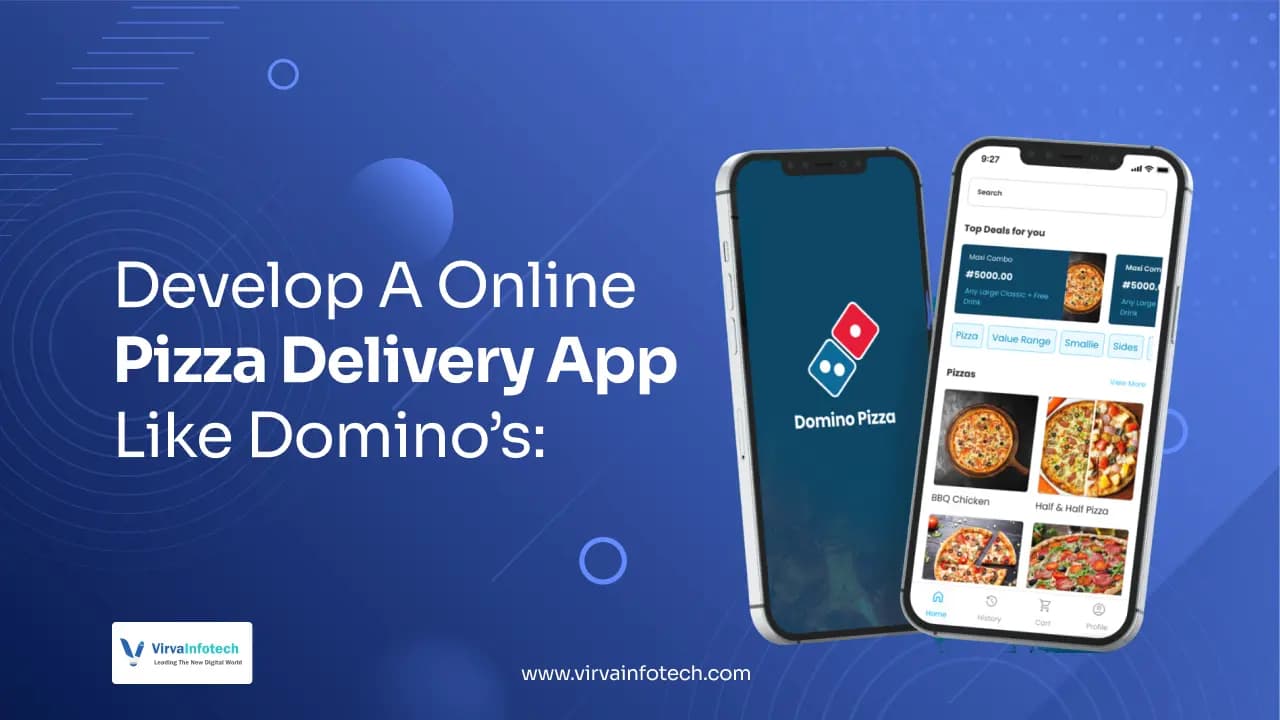
Introduction:
Building a pizza delivery app like Domino’s is one of the most profitable opportunities in today’s rapidly growing on-demand food delivery market. With increasing smartphone usage, busy lifestyles, and the demand for convenience, users prefer ordering food online instead of visiting restaurants physically. This shift has made food delivery apps a necessity for restaurants and food chains aiming to scale their business digitally.
Domino’s has become a global benchmark because of its seamless ordering experience, real-time tracking, personalized recommendations, and strong backend infrastructure. If you want to build a similar app, you need to focus on user experience, technology stack, scalability, and monetization strategies. Businesses looking for scalable solutions often rely on custom food delivery app development solutions to build high-performance platforms tailored to their needs. To build feature-rich and scalable delivery platforms, many restaurants and startups invest in custom mobile apps for food delivery businesses that ensure seamless user experiences, real-time operations, and long-term scalability.
Key Features of a Domino ’s-Like App
1. User Registration & Profile Management
A smooth onboarding process ensures users can quickly start ordering without friction. Allowing users to sign up via email, phone number, or social media simplifies the process and improves conversion rates. Features like saved addresses, payment methods, and order history help create a personalized experience.
To enhance security and user trust, integrating authentication methods like OTP verification and secure mobile app authentication solutions is essential. This improves data protection while ensuring a seamless login experience for repeat users.
2. Menu with Customization Options
A well-structured menu is the backbone of any food delivery app. Users should be able to easily browse categories, filter items, and customize pizzas based on toppings, crust types, and sizes. Personalization plays a huge role in increasing order value.
Advanced apps integrate AI-powered food recommendation engines to suggest items based on user behavior, previous orders, and preferences. This not only improves user experience but also increases sales through smart upselling.
3. Order Tracking
Real-time order tracking is a must-have feature in modern delivery apps. Customers expect full transparency from order placement to delivery. Integrating GPS tracking ensures users can monitor delivery progress in real-time.
Businesses often use real-time tracking API integration solutions to provide accurate delivery updates. Push notifications and live map tracking significantly improve customer satisfaction and trust.
4. Payment Integration
A secure and flexible payment system is critical for user retention. Supporting multiple payment options like UPI, wallets, cards, and COD ensures convenience for all users.
Using secure payment gateway integration services helps prevent fraud, ensures encrypted transactions, and builds trust among users. Offering discounts, coupons, and loyalty rewards further increases conversions.
5. Push Notifications & Alerts
Push notifications help in user engagement and retention. Sending alerts about order updates, promotions, and discounts encourages repeat purchases.
Advanced apps leverage AI-based push notification personalization tools to send targeted messages based on user behavior, increasing engagement and click-through rates.
6. Ratings & Reviews
Customer feedback helps improve service quality and build trust among new users. A rating system for both food and delivery ensures accountability and transparency.
Integrating customer feedback analytics tools allows businesses to analyze user reviews and continuously improve their services.
Step-by-Step Guide to Building an App Like Domino’s
1. Market Research & Define Your Niche
Understanding your audience and competitors is the backbone of building a successful pizza delivery app. Before development begins, you must analyze major competitors like Domino’s and identify what they are doing right—and where gaps exist. This includes evaluating delivery speed, pricing strategies, UI/UX experience, and customer reviews.
Businesses planning scalable delivery platforms can also explore this complete food delivery app development guide to understand essential features, technology stack selection, and long-term growth strategies.
The food and restaurant sector in the USA is rapidly evolving with digital ordering systems, on-demand delivery, and customer-focused platforms. Businesses planning to scale efficiently often explore restaurant industry software solutions USA to build modern and competitive food delivery applications.
Market research also plays a critical role in defining your Unique Selling Proposition (USP). Whether your focus is ultra-fast delivery, premium-quality ingredients, or budget-friendly pricing, your niche will differentiate your app in a competitive market. A well-defined niche not only improves customer targeting but also strengthens branding and marketing strategies, helping your app stand out in the crowded food delivery ecosystem.
2. Choose the Right Tech Stack
Choosing the right technology stack is crucial for ensuring your app’s performance, scalability, and long-term success. Businesses must decide between native and cross-platform development depending on their budget, timeline, and target audience. By leveraging cross-platform app development solutions, companies can build apps for both Android and iOS using a single codebase, reducing development costs and time-to-market significantly.
Additionally, backend performance plays a vital role in handling real-time orders, payments, and user data. Using scalable backend development services ensures your app can handle high traffic loads, peak-time demand, and seamless real-time updates. A robust tech stack ultimately guarantees smooth functionality, faster response times, and secure transactions, all of which are essential for a high-performing pizza delivery application.
3. UI/UX Design
User experience is one of the most critical success factors for any food delivery app. A clean, intuitive, and visually appealing interface ensures that users can easily browse menus, customize orders, and complete transactions without confusion. Investing in UI/UX design services helps create a user-centric design that enhances engagement, reduces friction, and improves overall usability.
A well-designed UI/UX also directly impacts conversion rates. When users can quickly find what they want and place orders effortlessly, they are more likely to complete purchases and return for future orders. Features like smooth navigation, attractive visuals, and easy checkout flows significantly reduce bounce rates and increase customer satisfaction, ultimately driving business growth.
Want to build a pizza delivery app with real-time tracking and seamless ordering features?
👉 Explore our custom food delivery app development solutions
4. Development Phase
The development phase is where your app comes to life, combining frontend and backend functionalities into a seamless platform. This stage involves implementing key features such as order placement, real-time tracking, payment integration, and push notifications. Partnering with a reliable mobile app development company ensures high-quality mobile experiences tailored to your business goals.
At the same time, backend systems and admin panels are developed using web app development services to manage orders, users, and analytics efficiently. Using modern frameworks and technologies ensures faster development cycles, better performance, and scalability. This phase lays the technical foundation of your app, making it essential to focus on code quality, performance optimization, and future scalability.
Building such scalable and high-performance applications also requires a strong backend architecture, real-time data handling, and seamless integrations. Many businesses rely on professional custom web application development company USA services to ensure flexibility, performance, and long-term growth.
5. Testing & QA
Testing is a critical phase that ensures your app is bug-free, secure, and performs efficiently across all devices. It involves multiple testing methods such as functional testing, usability testing, performance testing, and security testing. Businesses often rely on software quality assurance services to identify and fix issues before the app goes live, ensuring a smooth user experience.
A well-tested app reduces crashes, improves reliability, and enhances user trust. Testing also ensures that features like payment gateways, order tracking, and notifications function correctly under high traffic conditions. Investing in thorough QA processes helps prevent costly errors post-launch and ensures your app delivers a seamless and consistent experience to users.
6. Launch & Marketing
Once development and testing are complete, the next step is launching your app on platforms like the Google Play Store and Apple App Store. However, launching alone is not enough—effective marketing strategies such as App Store Optimization (ASO), social media campaigns, and paid advertising are essential for gaining visibility. Cross-linking with related resources like food delivery app like DoorDash development guide, can also enhance SEO and user engagement.
Additionally, businesses investing in restaurant booking app development solutions can expand their digital ecosystem and provide users with a more connected dining and ordering experience. A strong launch strategy combined with continuous marketing efforts ensures higher downloads, better user acquisition, and long-term success in the competitive food delivery market.
7. Maintenance & Updates
Post-launch maintenance is essential to keep your app competitive, secure, and up-to-date with evolving user expectations. Regular updates, bug fixes, and feature enhancements ensure smooth performance and improved user experience. Partnering with experts in software development services helps maintain app stability and introduce new functionalities over time.
Continuous improvement based on user feedback is key to long-term success. By analyzing user behaviour and updating features accordingly, businesses can enhance engagement and retention. Maintenance also includes security updates, performance optimization, and compatibility improvements, ensuring your app remains reliable and efficient.
Technology Stack for Pizza Delivery App
Frontend
Frontend technologies like React Native, Flutter, Swift, and Kotlin are widely used to build responsive and high-performance applications. These frameworks allow developers to create visually appealing and fast-loading interfaces that enhance user experience. Leveraging cross-platform mobile app development services ensures cost-effective and scalable app development across multiple platforms.
A strong frontend ensures smooth navigation, faster load times, and engaging visuals, all of which are essential for user retention. It directly impacts how users interact with your app, making it crucial to choose technologies that deliver both performance and flexibility.
Backend
Backend technologies such as Node.js, Django, and Laravel power the core functionality of your app, including order processing, user management, and real-time updates. Using backend API development services ensures seamless communication between the frontend and server, enabling efficient data handling and system performance.
A scalable backend is essential for handling large volumes of users and transactions, especially during peak hours. It ensures that your app remains stable, responsive, and secure even under heavy loads, making it a critical component of your tech stack.
Database
Databases like MongoDB, MySQL, and Firebase are used to store and manage user data, orders, and transactions efficiently. These databases support high-speed data processing and scalability, ensuring smooth operations even with growing user bases.
Choosing the right database depends on your app’s complexity and data requirements. A well-optimized database improves performance, ensures data accuracy, and enhances overall system reliability.
Cloud Hosting
Cloud platforms like AWS and Google Cloud provide scalable and secure infrastructure for hosting your app. By leveraging cloud application development services, businesses can ensure high availability, data security, and seamless scalability.
Cloud hosting enables apps to handle traffic spikes, store large datasets, and maintain performance without downtime. It also supports advanced features like real-time analytics and AI integration.
Payment Gateways
Secure payment gateways such as Razorpay, Stripe, and PayPal are essential for enabling smooth and safe transactions. These platforms support multiple payment options, ensuring convenience for users.
Integrating reliable payment systems builds user trust and enhances the overall checkout experience, leading to higher conversion rates and customer satisfaction.
Cost of Pizza Delivery App Development
| Business Goal | Recommended Features | Estimated Development Cost |
| Startup Delivery App | Menu management, online ordering, payment integration | $5,000 – $8,000 |
| Growing Restaurant Platform | Real-time tracking, push notifications, loyalty features | $15,000 – $20,000 |
| Enterprise Food Delivery Ecosystem | AI recommendations, analytics, multi-location management | $25,000 – $40,000+ |
Factors Affecting Cost
App development cost depends on multiple factors such as complexity, platform selection, team size, and third-party integrations. Advanced features like AI recommendations and real-time tracking increase development costs.
Using scalable SaaS application development services can help reduce long-term costs while improving flexibility and scalability, making it a smart investment for growing businesses.
Benefits of Creating a Pizza Delivery App
Increased Revenue
A pizza delivery app allows businesses to reach a wider audience and increase order volume through online channels. It eliminates geographical limitations and enables restaurants to serve more customers efficiently.
This leads to higher sales, better customer retention, and increased profitability over time.
Better Customer Engagement
Features like push notifications, loyalty programs, and personalized recommendations enhance customer engagement. These features encourage repeat orders and improve customer relationships.
Engaged customers are more likely to stay loyal and contribute to long-term business success.
Brand Visibility
Having a dedicated app strengthens brand identity and improves recognition. It creates a direct connection between the business and its customers.
This helps build trust, increase brand recall, and attract new users.
Operational Efficiency
Automation reduces manual errors and streamlines operations. Features like order management and delivery tracking improve efficiency.
This leads to faster service, reduced costs, and better overall performance
Data-Driven Insights
Analytics tools help businesses understand customer behavior, preferences, and trends. This data can be used to optimize marketing strategies and improve services.
Better insights lead to smarter decisions and improved business outcomes.
Scalability
A scalable app allows businesses to grow by adding new features, expanding services, and handling increased demand.
It ensures long-term sustainability and adaptability in a competitive market.
Conclusion
Building a pizza delivery app like Domino’s is a highly profitable opportunity in today’s rapidly growing food delivery market. With increasing consumer demand for convenience, speed, and digital-first experiences, businesses that invest in a well-structured mobile app can gain a significant competitive advantage. By focusing on essential features such as real-time tracking, secure payment integration, intuitive UI/UX, and scalable architecture, you can create a seamless user experience that drives customer satisfaction and repeat orders.
To succeed in this competitive landscape, it is crucial to choose the right technology stack, implement strong monetization strategies, and continuously optimize your app based on user feedback and analytics. Leveraging solutions like mobile app development services, SaaS development services, AI-powered personalization, and cloud-based scalability ensures long-term growth and performance. Ultimately, a well-designed pizza delivery app not only boosts revenue but also strengthens brand loyalty, operational efficiency, and market presence.
Ready to build a high-performance pizza delivery app in the USA?