


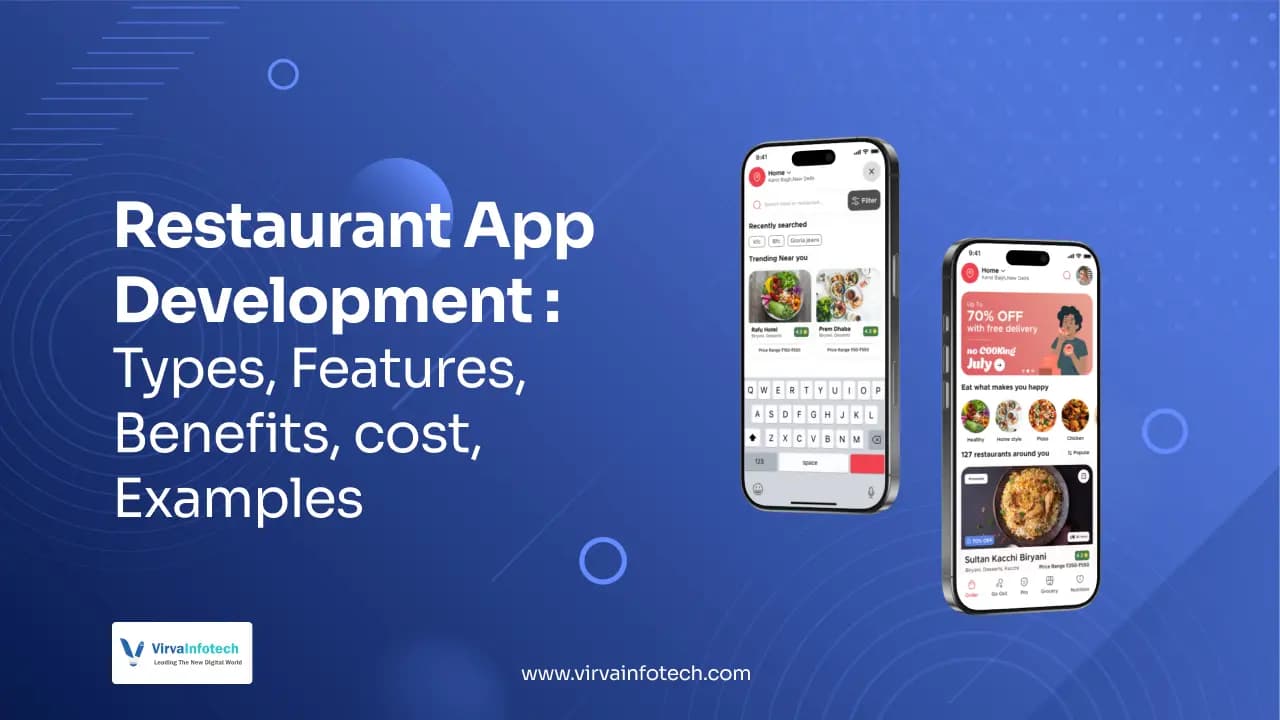
Introduction
Nowadays, customers can easily order their favourite meals from nearby restaurants using a mobile app. You can open the app, browse the menu, place an order, and wait for your food to arrive.
This convenience shows why restaurant mobile app development is important in the USA. As more customers prefer online ordering, a mobile app can help restaurants grow and keep customers coming back.
Restaurants across the USA are using digital platforms and restaurant software to improve daily work, engage customers, and make online ordering easier.
Why Invest in Restaurant Mobile App Development?
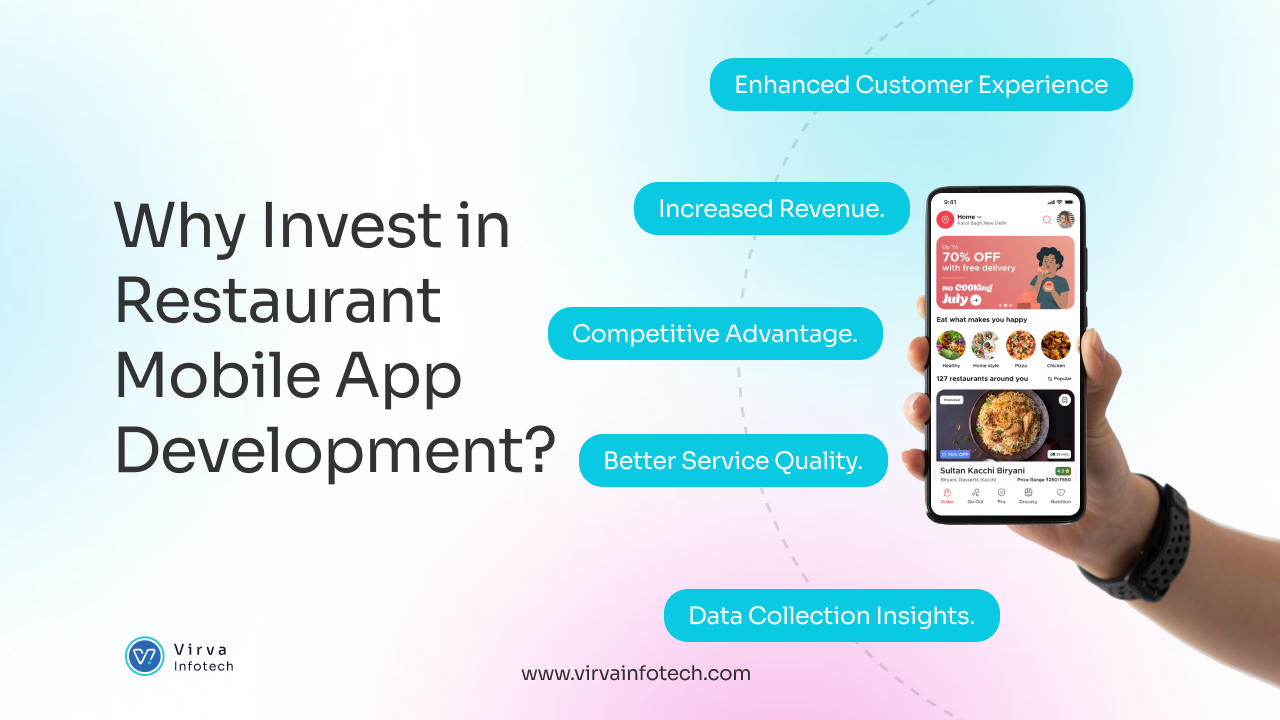
1. Enhanced Customer Experience
A restaurant mobile app significantly improves the customer experience by offering convenience, speed, and personalization. Customers can browse menus, customize orders, make payments, and even reserve tables—all from their smartphones. This eliminates friction and enhances user satisfaction.
Additionally, features like AI-driven recommendations, push notifications, and saved preferences help create a personalized journey. Businesses looking to enhance such experiences can leverage AI development services to deliver smarter, data-driven customer interactions.
2. Increased Revenue
Mobile apps open multiple revenue streams such as online ordering, in-app purchases, and loyalty programs. Restaurants can target a wider audience, including customers who prefer takeaway or delivery, thereby increasing order volumes.
Moreover, integrating custom software development services enables restaurants to implement advanced monetization strategies such as subscriptions, dynamic pricing, and personalized offers, thereby directly boosting profits.
3. Competitive Advantage
In a highly competitive food industry, having a mobile app gives restaurants a strong digital presence. It helps businesses stay visible and easy to reach. Restaurants can also offer special deals, early bookings, and loyalty rewards.
Restaurants can stand out from competitors by adding custom features to their mobile apps.
4. Data Collection & Insights
Restaurant apps collect valuable user data such as order history, preferences, and peak ordering times. This data helps businesses make informed decisions about menu optimization, pricing, and marketing campaigns.
Using software development services, restaurants can build advanced analytics dashboards to track performance and customer behavior effectively.
5. Better Service Quality
Apps streamline operations like order management and reservations, improving service efficiency. Real-time tracking and automated notifications reduce wait times and enhance customer satisfaction.
Additionally, integrating feedback systems allows restaurants to quickly resolve issues and improve service quality regularly.
Benefits of Developing a Restaurant Mobile App
1. Improved Efficiency
Restaurant apps automate key operations such as order processing, menu updates, and reservations. This reduces manual errors and speeds up service delivery, improving overall efficiency.
By integrating systems through SaaS development services, restaurants can manage operations seamlessly across multiple locations.
2. Customer Insights
Apps provide detailed insights into customer behavior, including preferences, order frequency, and feedback. This data enables restaurants to create personalized offers and targeted marketing campaigns.
With the help of AI development services, businesses can analyze this data to predict trends and optimize user engagement.
3. Direct Marketing Channel
Mobile apps serve as a direct marketing channel through push notifications, emails, and in-app promotions. Restaurants can promote new dishes, discounts, and events instantly.
This reduces dependency on third-party platforms and improves customer retention rates.
4. Enhanced Loyalty
Loyalty programs encourage repeat purchases by rewarding customers with points, discounts, and exclusive offers. These programs increase customer lifetime value.
Restaurants can implement gamified loyalty systems using UI/UX design and user experience services USA to improve engagement and usability.
Trending Features in Restaurant Mobile Apps
1. Online Ordering & Delivery Integration
Online ordering has become a standard feature, allowing customers to order food from anywhere. Integration with delivery systems ensures real-time tracking and seamless delivery.
You can also explore related concepts in this guide:
👉 “How to Build a Pizza Delivery App Like Domino’s (Cost & Features).”
2. Contactless Payments
Contactless payments enhance safety and convenience. Integration with digital wallets ensures secure and fast transactions.
3. Table Reservations
Reservation systems allow customers to book tables easily. This helps restaurants manage seating efficiently and reduce wait times.
👉 You can also learn more here:
“How to Build a Fully Custom Restaurant Booking and Reservation App Like OpenTable”
4. Flexible Menus
Customers can personalize orders based on dietary preferences. This improves satisfaction and caters to diverse audiences.
5. Loyalty Programs
Reward systems increase engagement and encourage repeat orders. Custom software development services can integrate advanced loyalty systems.
6. Real-time Order Tracking
Tracking improves transparency and builds trust. Customers can monitor their orders from preparation to delivery.
7. Push Notifications
Push notifications keep users informed about offers and updates, boosting engagement and conversions.
8. Social Media Integration
Social sharing features help restaurants gain visibility and attract new customers organically.
Types of Restaurant Mobile App Solutions
1. Order & Delivery Apps
Developers design these apps for online food ordering and delivery. They include features like menu browsing, payments, and tracking.
2. Table Booking Apps
Reservation apps help manage bookings and optimize seating capacity.
3. Loyalty Apps
These apps focus on rewards and customer retention strategies.
4. Full-Service Restaurant Apps
These apps combine ordering, booking, and loyalty features into a single platform, offering a complete solution.
How to Create a Restaurant App: Step-by-Step
Step 1: Define Your Objectives
Clearly define your business goals, whether it's increasing orders, improving customer engagement, or enhancing brand visibility.
Step 2: Market Research
Analyze competitors and identify gaps in the market. Understanding user needs helps in building a successful app.
Businesses planning to grow their restaurant apps can explore this complete food delivery app development guide. It covers delivery workflows, customer features, and ways to support app growth.
Step 3: Choose the Right Features
Select features like ordering, tracking, and loyalty programs that provide real value to users.
Step 4: Design UI/UX
A user-friendly interface ensures better engagement. Investing in UI/UX design services improves usability and retention.
Step 5: Develop the App
Hire experts offering mobile app development services to build a scalable and robust solution.
Step 6: Test the App
Testing ensures performance, security, and usability across devices.
Step 7: Launch & Market
Promote your app through SEO, social media, and email campaigns.
Step 8: Gather Feedback & Update
Regularly improve the app based on user feedback and market trends.
Cost of Restaurant Mobile App Development in 2026
1. Complexity of Features
The number and type of features can greatly affect restaurant app development costs. A basic app with a menu, ordering, and simple payments takes less time and costs less. However, as you add advanced functionalities, the cost increases significantly.
For example, features like real-time order tracking, AI-based recommendations, customer analytics, loyalty programs, and chatbot support require advanced development and integration. These features often involve backend logic, third-party APIs, and scalable infrastructure. AI features and a strong backend can make your app smarter and ready for future needs. However, these features can also increase development costs.
2. Platform (iOS, Android, or Both)
The choice of platform plays a major role in determining the cost of your restaurant app. Building separate native apps for iOS and Android requires two codebases. This increases development time and cost. However, native apps generally offer better performance and user experience.
Another option is that businesses can opt for cross-platform development using modern frameworks and technologies. This approach allows developers to build a single codebase that works on both platforms, reducing development time and cost. Using frameworks like Flutter can help businesses build apps for both platforms while reducing development time and cost.
3. UI/UX Design
UI/UX design is a critical factor that influences both user engagement and development cost. A good interface helps users browse menus, place orders, and make payments with ease. Investing in high-quality design improves customer satisfaction and retention.
Custom UI/UX design involves creating unique layouts, animations, user flows, and interactive elements tailored to your brand identity. This level of customization requires experienced designers and additional time, which increases the cost. Good UI/UX design improves the user experience and can increase orders and long-term growth. A visually appealing and intuitive app also helps you stand out in a competitive market.
4. Development Team Location
The location and expertise of your development team greatly influence the overall cost of your restaurant mobile app. Development teams in the USA and Western Europe often charge more because of higher labor costs. They may also offer strong communication, quality, and project management.
Outsourcing to regions with lower labor costs can reduce expenses. Choosing the right development partner is important to maintain quality. However, it requires careful evaluation of expertise, portfolio, and communication standards. A reliable mobile app development company can help you balance cost, quality, and delivery time.
5. Average Cost Range
Restaurant app costs depend on features, platforms, design, and team location. A basic app may cost around $20,000, while an advanced app can cost $150,000 or more.
A mid-level app with real-time tracking, payments, push notifications, and loyalty features may cost between $50,000 and $100,000. Additional costs may include maintenance, updates, third-party integrations, and scaling infrastructure. Many businesses invest in custom software and ongoing support to keep their apps fast, reliable, and easy to expand.
Key Features of a Successful Restaurant Mobile App
- User-friendly interface
- Secure payment options
- Robust order management system
- Personalized user experience
- Efficient customer support
Why Choose Your Company for Restaurant App Development
- Expertise in software development services
- Custom scalable solutions
- End-to-end support
- Latest technologies (AI, Cloud, SaaS)
- Proven track record
Conclusion
Restaurant mobile apps are transforming the food industry by enhancing customer experience, increasing revenue, and improving daily efficiency. Businesses that invest in advanced technologies and user-focused design can stay ahead of the competition.
Ready to digitize your restaurant business with a powerful mobile app? Our development team creates custom restaurant applications with online ordering, table reservations, loyalty programs, real-time tracking, secure payments, and AI-powered customer experiences. We help restaurants in the USA build scalable, user-friendly platforms that increase engagement and drive long-term growth.